Building a website with AI vs WordPress
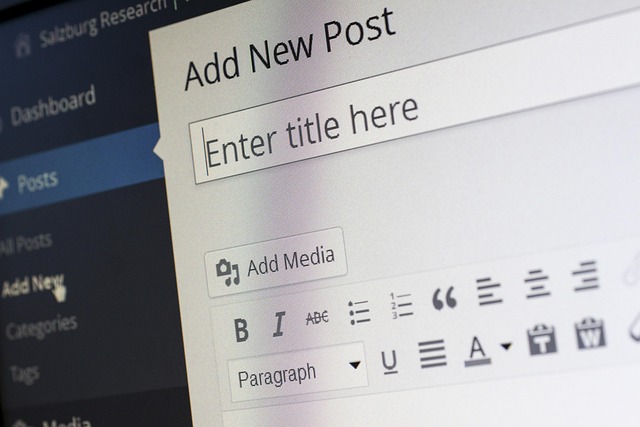
Little by little, artificial intelligence is becoming an increasingly important part of my daily work as a developer, but also of the everyday lives of a much wider audience. Until recently, anyone who wanted to build a website without technical skills could rely on WordPress. By choosing a theme and a few plugins, it was already possible to create a fully functional website. With development skills, it was then possible to take things even further by customizing every aspect of it.
With the rise of AI, that technical barrier has become even lower. Today, even someone with no development experience can create a website from scratch and customize it simply by using prompts.
In this article, we'll compare these two approaches and look at their respective strengths and weaknesses. We'll focus on brochure websites and blogs—not full-fledged web applications.
Two very different approaches
WordPress: the “productivity” solution
WordPress is a long-standing CMS that remains a benchmark today for quickly building websites. Slightly less than half of all websites on the internet run on WordPress. It relies on a vast ecosystem of themes and plugins, making it easy to add functionality without having to build everything from scratch.
For certain premium themes and some plugin features, however, you do have to open your wallet.
Its hosting is straightforward to set up, and it offers an excellent time-to-market, making it ideal for quickly launching a project.
AI: the “flexibility” solution
Artificial intelligence opens up a new approach to website creation. Unlike traditional tools, it can quickly generate a complete website foundation from simple natural language instructions. This makes it possible to build a site from scratch without manually writing code.
This approach offers a high degree of flexibility: design, structure, and features can be adjusted simply through prompts, without relying on a fixed ecosystem of themes or plugins. AI also makes it easy to iterate quickly, experiment with different versions, and continuously refine the result.
However, as the site grows, updates often become slower and more fragile, since each change increases the risk of introducing regressions.
Building a Website with WordPress
Installation and setup
The first step with WordPress is choosing a hosting provider and installing the CMS, often in just a few clicks using the tools offered by most hosts. Once the installation is complete, you select a theme, which defines the structure and base design of the site. This stage allows you to get started quickly without writing any code.
Building the site
Website building mainly relies on tools like Elementor or Gutenberg, which let you create pages using a drag-and-drop interface. You then enhance the site with essential plugins, including SEO, caching, security, and contact forms. Together, these tools make it possible to build a complete website without deep development work.
Limitations
Despite its apparent flexibility, WordPress does have some drawbacks. Performance can degrade as more plugins are added, creating a form of technical debt that becomes difficult to manage. Advanced customization can still be complex without development skills, and maintenance (updates, compatibility, security) becomes a critical long-term concern.
Without any development work, you often quickly hit a wall when trying to go further with customization.
Building a Website with AI
Project generation
Creating a website with AI usually starts with an initial prompt, for example to generate a brochure site or a blog. Development then continues in an assisted way using tools like Copilot or Cursor. The AI helps write the user interface code, and through iteration, the site is gradually improved and modified step by step.
Limitations
This approach still depends heavily on the quality of the AI tools being used, and especially on the patience of the person writing the prompts. The generated code can vary in quality and often requires adjustments. Debugging can be difficult without the necessary knowledge, particularly as the project grows.
Direct comparison
WordPress and AI-based solutions address different needs and stand apart on several key aspects. Setup time is generally shorter with WordPress for a standard website, while AI can offer a high level of customization since the site is generated from scratch.
Conclusion
It is also perfectly possible to build a WordPress site and enhance it with AI 🙂
